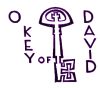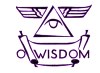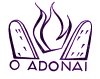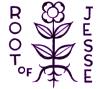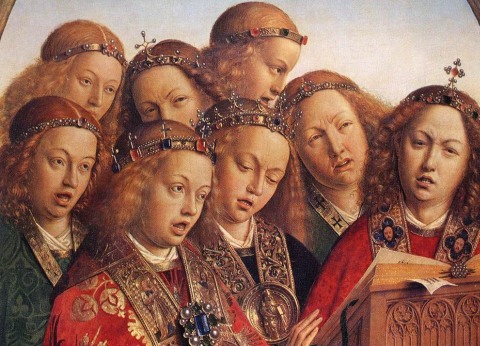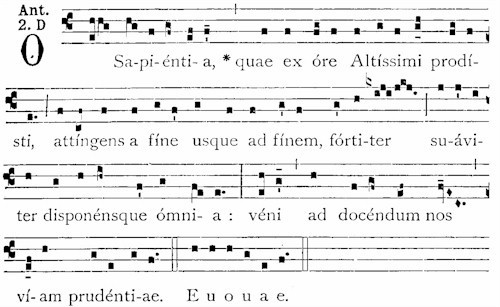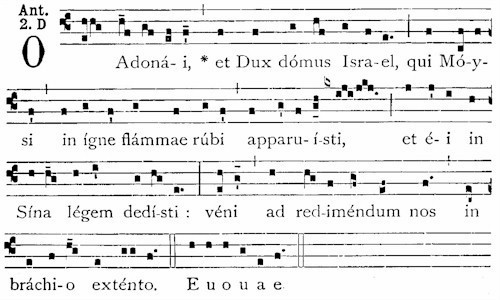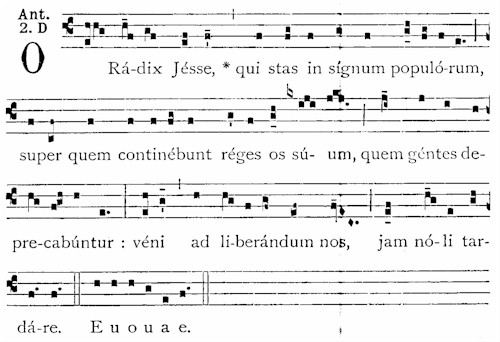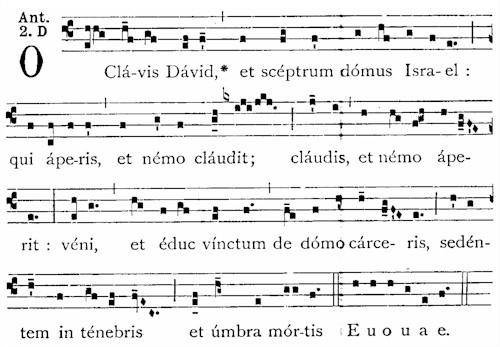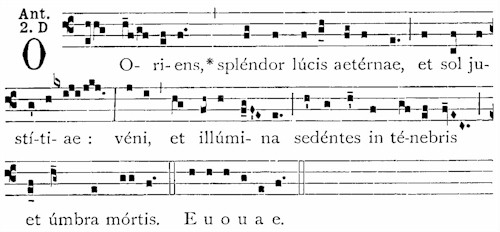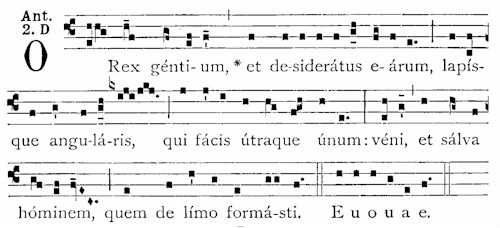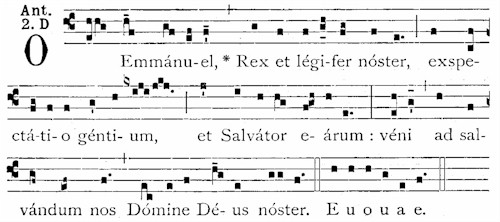
Today is the last Sunday in Ordinary Time. Next Sunday being the First Sunday of Advent, a new liturgical year begins. This poster, shamelessly swiped from Father Zuhlsdorf's blog, wdtprs.com, is a more than apt reminder of what Advent means to Catholics the world over.
In Father Z's own words, posted today on his blog:
"In the older, traditional calendar there is no special liturgy for this Sunday. This is a poignant way to point toward the seamless cycle of the Church’s representation of the mysteries of salvation. In the newer calendar we are focused also on the end times in the Feast of Christ the king.
We simultaneously long for the Second Coming of the Lord – that is what Advent is about, by the way, the Second Coming in glory and judgment – and we dread it. Early Christians prayed with longing “Come! Lord, Come!” In later centuries the sense of longing was replaced with sober realization of what we will endure on the day of His Coming.
Both of these attitudes can help us in our own day to be concerned with joyful sobriety, sober joy, about the meeting we will have with the Lord when He comes. Do not forget that the last day of your life is going to be an anticipation of the Second Coming. As Augustine wrote: Qualis in die isto quisque moritur, talis in die illo iudicabitur (ep. 199.2).
In death your life will be laid bare. In the Second Coming itself, the Lord will lay bare all things. That which we have endured in life with patient perseverance and sometime suffering shall be given explanations.
St. Augustine explained that the Lord’s judgments are obscure to us now, but later they will be made clear. Justice in this life is imperfect. In the life to come it will be perfected.
All that which He has permitted to happen now, will be given reasons and explanations and we will finally see the perfect justice even behind what now is hidden and challenging.
The Church’s year presents us anew with the unchanging mysteries of our salvation. But year year we are a little different and closer to the moment when the Lord’s hidden justice and judgments will be revealed. Do not be content to leave yourself straying on your life’s path toward your judgment with the knowledge of your saving Faith as it was when you were fresh from catechism as a child. Some people do. Do not leave yourself cold on the this path without the warming effect of works of mercy.
Live in sober joy, or joyful sobriety about the state of your soul even as you follow your mapway toward the Coming Lord through our Holy Church’s mysterious years of waiting."
May God keep this miserable sinner sane and healthy in His service!!! May the Extraordinary Form of the Mass be preserved forever and seen everywhere.
Followers
Showing posts with label Advent. Show all posts
21 November 2010
20 December 2009
HT Father Z- Fourth Sunday of Advent
WDTPRS: 4th Sunday of Advent - COLLECT (2002MR)
The Collect for this Sunday is the Post-communion of the Feast of the Annunciation (25 March) in the 1962MR. Most of you who recite the Angelus know this prayer. This time we also get the WDTPRS version since we want to know what the prayer really says. This is also the prayer said traditionally after the Alma Redemptoris Mater, sung following Compline during Advent.
COLLECT - LATIN TEXT (2002MR):
Gratiam tuam, quaesumus Domine,
mentibus nostris infunde,
ut qui, Angelo nuntiante,
Christi Filii tui incarnationem cognovimus,
per passionem eius et crucem
ad resurrectionis gloriam perducamur.
The last part, per passionem eius et crucem ad resurrectionis gloriam perducamur has a wonderful flow to it with its alliteration and snappy cadence, followed as it is by the rhythmically gear changing conclusion, Per Dominum nostrum Iesum Christum…. Collects are often little masterpieces. They deserve great care in rendering them into a liturgically smooth, yet accurate version. In WDTPRS we are purposely being rather “slavish” in translating so you can see the raw text. Imagine how hard it is to work up good liturgical versions.
We never have to brush dust from our frequently exploited Lewis & Short Latin Dictionary. Therein we find that cognosco is, generally, “to become thoroughly acquainted with (by the senses or mentally), to learn by inquiring…”, but in the perfect tenses (cognovimus) it is “to know” in all periods of Latin. The verb infundo basically is “to pour in, upon, or into” but in the construction (which we see today – infundere alicui aliquid) “to pour out for, to administer to, present to, lay before”. Simply, it can mean, “communicate, impart”. The verb perduco “to lead or bring through”, is “guide a person or thing to a certain goal, to a certain period”. Interestingly, both infundo and perduco can have the overtone of to anoint, or smear with something.
ICEL (1973 translation of the 1970MR):
Lord,
fill our hearts with your love,
and as you revealed to us by an angel
the coming of your Son as man,
so lead us through his suffering and death
to the glory of his resurrection
for he lives and reigns…
A TRADITIONAL VERSION:
Pour forth, we beseech Thee, O Lord, Thy grace into our hearts, that we, to whom the incarnation of Christ, Thy Son, was made known by the message of an angel, may by His Passion and Cross be brought to the glory of His resurrection, (through the same Christ our Lord).
Some people think that “Thee” and “Thou” are formal. Au contraire! These are familiar forms of pronouns for the second person singular used by a superior to an underling or between equals or friends. The “you” form (derived from “ye”) is the more formal! In traditional prayers (Our Father, who art in heaven, hallowed by Thy name…) we address God with a familiar, intimate form not so common today unless you are Amish or Quaker. You will raise an eyebrow or two at the bowling alley if you shift to “thou”: “Since it’s the tenth frame and thou hadst a strike, thrice canst thou bowl. Take up thy ball and bowl, already, ‘cause I gotta go home.”
Well… that last phrase shows some ICEL influence, but I think you get my drift.
I know the new translation is coming, and that it marks a huge improvement over the lame-duck massacre we are using now, but I often wish we could have had a version with all the "thees and thous". A more archaic, stylized prayer could have cut across differences between, say, the English of Africa, Australia, and Asia. They say Americans and British are two peoples separated by a common language. But not when we read Shakespeare or we say the traditional Our Father! The CDWDS document for the norms of translation, Liturgiam authenticam, says that the language of liturgy should be distinct from daily speech:
27. Even if expressions should be avoided which hinder comprehension because of their excessively unusual or awkward nature, the liturgical texts should be considered as the voice of the Church at prayer, rather than of only particular congregations or individuals; thus, they should be free of an overly servile adherence to prevailing modes of expression. If indeed, in the liturgical texts, words or expressions are sometimes employed which differ somewhat from usual and everyday speech, it is often enough by virtue of this very fact that the texts become truly memorable and capable of expressing heavenly realities. Indeed, it will be seen that the observance of the principles set forth in this Instruction will contribute to the gradual development, in each vernacular, of a sacred style that will come to be recognized as proper to liturgical language. Thus it may happen that a certain manner of speech which has come to be considered somewhat obsolete in daily usage may continue to be maintained in the liturgical context.Anyway, it couldn’t have hurt. But that is not going to happen… unless…. unless…
Maybe we could have a petition.... "What if we just said ‘Thee’?" ... How would be vote?
n
n
In an English translation of the Roman Missal what style would you prefer?
LITERAL TRANSLATION:
We beg You, O Lord,
pour Your grace into our minds and hearts,
so that we who came to know the incarnation of Christ Your Son
in the moment the Angel was heralding the news,
may be guided through His Passion and Cross
to the glory of the resurrection.
Angelo nuntiante is an ablative absolute, hard to render in English without using a paraphrase. The participle nuntiante is in the present tense, or better, in a tense “contemporary” with the time of the verb cognovimus having a past tense. Thus, in the very moment the Angel was heralding the good news, we (collectively in the shepherds) knew about how God the Son Eternal took our whole human nature perfectly into an indestructible bond with His divinity.
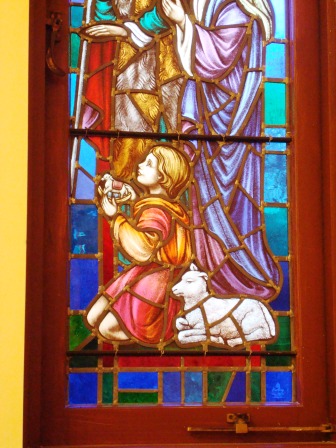
Good Advent shepherds, they rushed to the Coming of the Lord, to see the Word made flesh lying in the wooden manger. “Seeing is believing”, they say, but believing makes us want to see! “Crede ut intellegas! Believe that you may understand!” is a common theme for St. Augustine (e.g., s. 43,4.7; 118,1; Io. eu. tr. 29,6). Today many people automatically oppose faith against reason, authority versus intellect, as if they were mutually exclusive. In fact, faith and authority are indispensable for a deeper rational, intellectual apprehension of anything. In all the deeper questions of human existence, we need the illumination from grace, we must believe and receive. Faith is the foundation of our hope which leads to love and communion with God, as Augustine might say (trin. 8,6).
The Angel heralded with authority. The shepherds believed. They rushed to Bethlehem. They saw the Infant. They understood the message. Then they worshiped the Word made flesh Who opened for them a new life.
How often do we hear about something or learn a new thing and then rush to know more, to have personal experience, to see?
Think about this. If you had been told in the night by angels to go somewhere, do you think you would roll over and say "It can wait"? Would you, stroll? Saunter?
I think I would run until my lungs burst.
This is a paradigm for our life of faith. There is an interlocking cycle of hearing a proclamation (such as the Gospel at Mass, a homily, or a teaching of the Church) or observing the living testimony of a holy person’s life, and by this experience coming to know and then love the content of that proclamation or living testimony. The content is the Man God Jesus Christ. By knowing Him we come all the better to love Him and in loving Him we desire better to know Him.
An act of faith, acceptance of the authority of the content of what we receive, opens unto previously unknown territory, a vast depth otherwise closed to us. For the non-believer, on the other hand, a miracle is simply something inexplicable having nothing of the supernatural.
For a non-believer being nice or hard working can never ascend to true virtue or holiness. For him, the content of the Faith itself (both Jesus as well as what we learn and assent to) appears to be pleasant or interesting, but in the end remains naïve or foolish.
As we rush into Advent’s final days, that first candle we lit on our wreaths is now quite depleted.
From 17 December to Christmas Eve solemn days envelop us and the haunting “O Antiphons” of vespers one after another cloak us in our longing: “O come! O come!.. to teach us… redeem us… deliver us… ransom us… free us… enlighten us… save us… save us….”
We are deeply wrapped within our penitential holyday cheer because our celebration of the Lord in His First Coming is near to hand, but we do not forget that His Second Coming will bring our final judgment.
18 December 2009
HT Father Z- The O Antiphons
The O Antiphons developed from an ancient custom in the Church going back to the seventh or eighth century. There are seven of these special antiphons, and their texts spring from the Old Testament Hebrew Scriptures, the Prophetic and Wisdom Books. They are found in the Liturgy of the Hours, or Breviary, which clerics, some religious orders, and some lay people use for daily prayer.
The O Antiphons are short prayers recited before and after the Magnificat, the great prayer of Mary used during Vespers, evening prayer, beginning on December 17, seven days before the Vigil of Christmas (December 24). The seventh and last antiphon is sung during Vespers of December 23. They are called the "O Antiphons" because they all begin with the letter-word "O" for they address Jesus by one of His Old Testament titles. They are fervent prayers asking Him to come to us.
Remember that Advent is about the many ways in which the Lord comes. He came at Bethlehem in the fullness of time and so, in the liturgical year, he comes to us sacramentally. He will also come again at the end of the word, as Judge of the living and the dead. Christ comes to us also in the consecration of bread and wine by the priest at Holy Mass and, in a special way, perhaps the most profound way, in a good Holy Communion. He comes in the person of the priest, who is alter Christus, another Christ. He also comes in the person of our neighbor, especially those who are in need of the spiritual and corporal works of mercy. Christ comes in many ways and, during Advent, John the Baptist has been reminding us in the liturgy to "make straight His paths".
There is a little-known fact about the order of these ancient O Antiphons. This is not apparent in English, but it can be seen clearly in the official language of the Roman Catholic Church: Latin. The Latin versions of each of the titles of the Messiah: Sapientia (Wisdom), Adonai (Lord), Radix (Root), Clavis (Key), Oriens (Dawn), Rex (King), and Emmanuel (Emmanuel). Take the first letters of each of the titles and write them backwards, thus counting down the days of the feast: EROCRAS or "ero cras." This means in Latin "I will be (here) tomorrow".
The song "O Come, O Come, Emmanuel" is simply a slightly modified sung version of the seven O Antiphons.
The O Antiphons are short prayers recited before and after the Magnificat, the great prayer of Mary used during Vespers, evening prayer, beginning on December 17, seven days before the Vigil of Christmas (December 24). The seventh and last antiphon is sung during Vespers of December 23. They are called the "O Antiphons" because they all begin with the letter-word "O" for they address Jesus by one of His Old Testament titles. They are fervent prayers asking Him to come to us.
Remember that Advent is about the many ways in which the Lord comes. He came at Bethlehem in the fullness of time and so, in the liturgical year, he comes to us sacramentally. He will also come again at the end of the word, as Judge of the living and the dead. Christ comes to us also in the consecration of bread and wine by the priest at Holy Mass and, in a special way, perhaps the most profound way, in a good Holy Communion. He comes in the person of the priest, who is alter Christus, another Christ. He also comes in the person of our neighbor, especially those who are in need of the spiritual and corporal works of mercy. Christ comes in many ways and, during Advent, John the Baptist has been reminding us in the liturgy to "make straight His paths".
There is a little-known fact about the order of these ancient O Antiphons. This is not apparent in English, but it can be seen clearly in the official language of the Roman Catholic Church: Latin. The Latin versions of each of the titles of the Messiah: Sapientia (Wisdom), Adonai (Lord), Radix (Root), Clavis (Key), Oriens (Dawn), Rex (King), and Emmanuel (Emmanuel). Take the first letters of each of the titles and write them backwards, thus counting down the days of the feast: EROCRAS or "ero cras." This means in Latin "I will be (here) tomorrow".
The song "O Come, O Come, Emmanuel" is simply a slightly modified sung version of the seven O Antiphons.
HT American Papist-
The O Antiphons Begin


I love the tradition of the O Antiphons. It's also easy for me to remember them each year because they start on my half birthday.Fr. William Saunders explains what they are :
The “O Antiphons” refer to the seven antiphons that are recited (or chanted) preceding the Magnificat during Vespers of the Liturgy of the Hours. They cover the special period of Advent preparation known as the Octave before Christmas, Dec. 17-23, with Dec. 24 being Christmas Eve and Vespers for that evening being for the Christmas Vigil.
... The importance of “O Antiphons” is twofold: Each one highlights a title for the Messiah: O Sapientia (O Wisdom), O Adonai (O Lord), O Radix Jesse (O Root of Jesse), O Clavis David (O Key of David), O Oriens (O Rising Sun), O Rex Gentium (O King of the Nations), and O Emmanuel. Also, each one refers to the prophecy of Isaiah of the coming of the Messiah.O Antiphons
The seven "O Antiphons" (also called the "Greater Antiphons" or "Major Antiphons") are prayers that come from the Breviary's Vespers during the Octave before Christmas Eve, a time which is called the "Golden Nights." Each Antiphon begins with "O" and addresses Jesus with a unique title which comes from the prophecies of Isaias and Micheas (Micah), and whose initials, when read backwards, form an acrostic for the Latin "Ero Cras" which means "Tomorrow I come." Those titles for Christ are: SapientiaThese glorious titles in more detail:
Below are the O Antiphons in both English and Latin. One is prayed each evening at Vespers time (around sunset), and families can make up their own ceremonies using the Antiphons, Scripture, by singing or listening to sacred music (especially "O Come, Emmanuel," see below), adding to their Jesse Trees, etc. Whatever you do, set the scene, as you should with all Catholic family devotions: burn incense, lower the lights, light candles, use sacred music at appropriate times, meaningful symbols, etc. To pray the O Antiphons as they are prayed in the Divine Office, begin with the Antiphon, then pray the Magnificat (included below), then repeat the Antiphon. It would be wonderful if perhaps one parent can chant, or at least read, the Antiphons in Latin, with the second parent reading them in the vernacular afterwards. To hear them chanted (MP3 files), 1 click the speaker icon; to see the musical notation, click the musical note.
My Soul Doth Magnify the Lord / Magnificat The O Antiphons are the source of the lyrics of the Advent song "Veni, veni Emmanuel" ("Come, O come Emmanuel") which you can hear by clicking here. It would be beautiful for the family to sing this lovely Advent song at the conclusion of the O Antipons. For the lyrics, see the Lyrics and Melodies to Traditional Catholic Hymns page. To download the O Antiphons and Magnificat, in both English and Latin, for use in your home, click here for a 2-page Microsoft Word document that has all you need. Credits: 1 The MP3 files come from Father Jim Tucker ("Don Jim"), of the blog "Dappled Things" (will open in new browser window). | |||||||||||||||||||||||||||||||||
01 December 2009
Advent and Christmas
Just finished ordering the Build a Bear items and Twilight Barbies for my best friend Dorothy's daughter Rachel. Dorothy allows us to pretend that we are really Rachel's parents, so we can spoil her as much as we feel necessary. We ignore Dorothy on how much to spend, and specifically look for the "Dorothy is gong to kill us gift" Usually the theme for the DIGTKUG is "A Christmas Story", to which we introduced her in 2003 the year we were married, but this year it revolves around the movie Wolverine. Rachel has a huge crush on Hugh Jackman, and it is our duty to see that she receives something appropriate from Santa, something that is noisy. In 2007 when we were in ALbany, the DIGTKUG was the RAlphie doll from the movie, and it spoke several of the more memorable sayings from the movie. Geoff, needless to say also received the doll, as he and Rachel LOVE A Christmas Story and can quote it ad nauseam. It is banned in our home from Candlemas until 13 November of every year. In 2006, it was an ALF stuffed toy from eBay. She can quote ALF also.
Rachel is a beautiful 20 year woman who was born with some developmental disabilities as well as numerous health problems, the latter of which she has thankfully mostly overcome. She is simply a joy to be around and we love spoiling her.
When Geoff and I first became engaged, Dorothy was the first person told and the first member of the bridal party, as was Rachel. She immediately transformed into PQ1, which is code for Plotting Queen 1, and what a great Matron of Honor she was. Thankfully she insisted that I was not having a bachelorette party- I almost kissed her feet in gratitude. She and Geoff plotted behind my back for 15 months about the bridal shower, and all other things by the way, but planing a wedding never went smoother. She helped me when the girl who was supposed to do the hair for the bridal party dropped out two months before- she went to her salon and talked them into opening on their day off to accomodate a bride who was not even a customer at the time. Everything went smoothly, and she was simply a rock. My shower was great.
Another bridesmaid, Lori Gillon was also great- she knew that Geoff and I were meant to be from the start, when I had the worst case of nerves on our first date, and she helped me to fix that. Without her, their would be no Geoff and Agnes.
To this day, Dorothy is the big sister I never had, and I still call her PQ1 (Yes, I am PQ2)
While we won't see Dorothy, Chris her husband or Rachel until the summer, Christmas is never the same without them. So, we use that as our excuse to "spoil" Rachel. Being allowed to do so is the greatest Christmas gift.
Rachel is a beautiful 20 year woman who was born with some developmental disabilities as well as numerous health problems, the latter of which she has thankfully mostly overcome. She is simply a joy to be around and we love spoiling her.
When Geoff and I first became engaged, Dorothy was the first person told and the first member of the bridal party, as was Rachel. She immediately transformed into PQ1, which is code for Plotting Queen 1, and what a great Matron of Honor she was. Thankfully she insisted that I was not having a bachelorette party- I almost kissed her feet in gratitude. She and Geoff plotted behind my back for 15 months about the bridal shower, and all other things by the way, but planing a wedding never went smoother. She helped me when the girl who was supposed to do the hair for the bridal party dropped out two months before- she went to her salon and talked them into opening on their day off to accomodate a bride who was not even a customer at the time. Everything went smoothly, and she was simply a rock. My shower was great.
Another bridesmaid, Lori Gillon was also great- she knew that Geoff and I were meant to be from the start, when I had the worst case of nerves on our first date, and she helped me to fix that. Without her, their would be no Geoff and Agnes.
To this day, Dorothy is the big sister I never had, and I still call her PQ1 (Yes, I am PQ2)
While we won't see Dorothy, Chris her husband or Rachel until the summer, Christmas is never the same without them. So, we use that as our excuse to "spoil" Rachel. Being allowed to do so is the greatest Christmas gift.
Subscribe to:
Posts (Atom)