The O Antiphons developed from an ancient custom in the Church going back to the seventh or eighth century. There are seven of these special antiphons, and their texts spring from the Old Testament Hebrew Scriptures, the Prophetic and Wisdom Books. They are found in the Liturgy of the Hours, or Breviary, which clerics, some religious orders, and some lay people use for daily prayer.
The O Antiphons are short prayers recited before and after the Magnificat, the great prayer of Mary used during Vespers, evening prayer, beginning on December 17, seven days before the Vigil of Christmas (December 24). The seventh and last antiphon is sung during Vespers of December 23. They are called the "O Antiphons" because they all begin with the letter-word "O" for they address Jesus by one of His Old Testament titles. They are fervent prayers asking Him to come to us.
Remember that Advent is about the many ways in which the Lord comes. He came at Bethlehem in the fullness of time and so, in the liturgical year, he comes to us sacramentally. He will also come again at the end of the word, as Judge of the living and the dead. Christ comes to us also in the consecration of bread and wine by the priest at Holy Mass and, in a special way, perhaps the most profound way, in a good Holy Communion. He comes in the person of the priest, who is alter Christus, another Christ. He also comes in the person of our neighbor, especially those who are in need of the spiritual and corporal works of mercy. Christ comes in many ways and, during Advent, John the Baptist has been reminding us in the liturgy to "make straight His paths".
There is a little-known fact about the order of these ancient O Antiphons. This is not apparent in English, but it can be seen clearly in the official language of the Roman Catholic Church: Latin. The Latin versions of each of the titles of the Messiah: Sapientia (Wisdom), Adonai (Lord), Radix (Root), Clavis (Key), Oriens (Dawn), Rex (King), and Emmanuel (Emmanuel). Take the first letters of each of the titles and write them backwards, thus counting down the days of the feast: EROCRAS or "ero cras." This means in Latin "I will be (here) tomorrow".
The song "O Come, O Come, Emmanuel" is simply a slightly modified sung version of the seven O Antiphons.
Showing posts with label O Antiphons. Show all posts
Showing posts with label O Antiphons. Show all posts
18 December 2009


HT American Papist-
The O Antiphons Begin
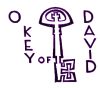

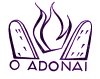 I love the tradition of the O Antiphons. It's also easy for me to remember them each year because they start on my half birthday.
Fr. William Saunders explains what they are :
 The “O Antiphons” refer to the seven antiphons that are recited (or chanted) preceding the Magnificat during Vespers of the Liturgy of the Hours. They cover the special period of Advent preparation known as the Octave before Christmas, Dec. 17-23, with Dec. 24 being Christmas Eve and Vespers for that evening being for the Christmas Vigil.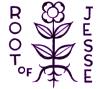
 ... The importance of “O Antiphons” is twofold: Each one highlights a title for the Messiah: O Sapientia (O Wisdom), O Adonai (O Lord), O Radix Jesse (O Root of Jesse), O Clavis David (O Key of David), O Oriens (O Rising Sun), O Rex Gentium (O King of the Nations), and O Emmanuel. Also, each one refers to the prophecy of Isaiah of the coming of the Messiah.
O Antiphons
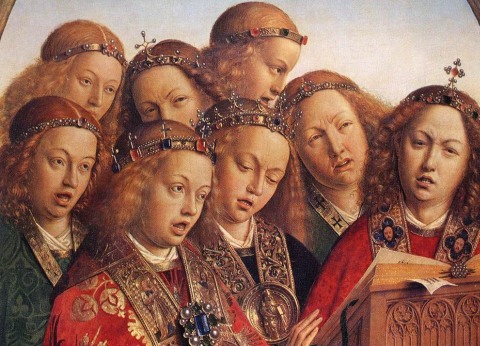
The seven "O Antiphons" (also called the "Greater Antiphons" or "Major Antiphons") are prayers that come from the Breviary's Vespers during the Octave before Christmas Eve, a time which is called the "Golden Nights." Each Antiphon begins with "O" and addresses Jesus with a unique title which comes from the prophecies of Isaias and Micheas (Micah), and whose initials, when read backwards, form an acrostic for the Latin "Ero Cras" which means "Tomorrow I come." Those titles for Christ are: SapientiaThese glorious titles in more detail:
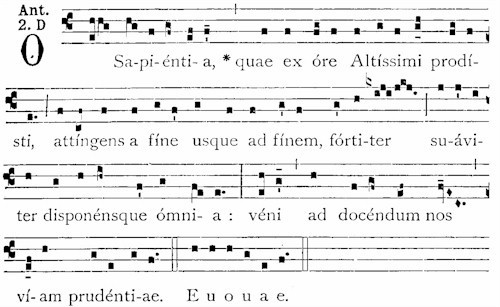
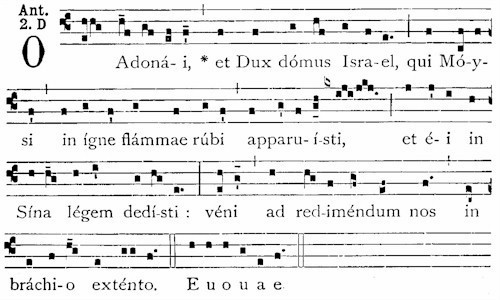
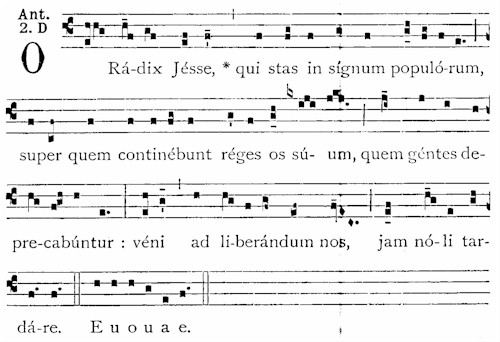
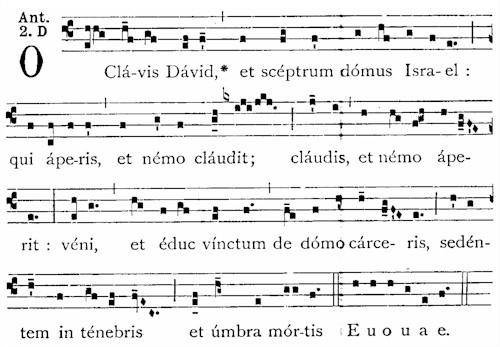
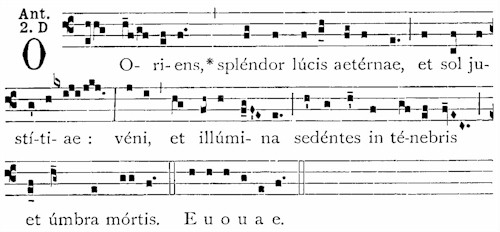
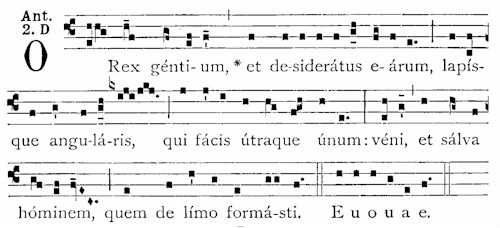
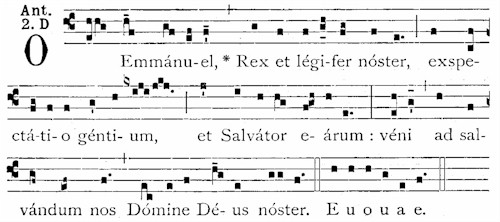
Below are the O Antiphons in both English and Latin. One is prayed each evening at Vespers time (around sunset), and families can make up their own ceremonies using the Antiphons, Scripture, by singing or listening to sacred music (especially "O Come, Emmanuel," see below), adding to their Jesse Trees, etc. Whatever you do, set the scene, as you should with all Catholic family devotions: burn incense, lower the lights, light candles, use sacred music at appropriate times, meaningful symbols, etc. To pray the O Antiphons as they are prayed in the Divine Office, begin with the Antiphon, then pray the Magnificat (included below), then repeat the Antiphon. It would be wonderful if perhaps one parent can chant, or at least read, the Antiphons in Latin, with the second parent reading them in the vernacular afterwards. To hear them chanted (MP3 files), 1 click the speaker icon; to see the musical notation, click the musical note. 
My Soul Doth Magnify the Lord / Magnificat The O Antiphons are the source of the lyrics of the Advent song "Veni, veni Emmanuel" ("Come, O come Emmanuel") which you can hear by clicking here. It would be beautiful for the family to sing this lovely Advent song at the conclusion of the O Antipons. For the lyrics, see the Lyrics and Melodies to Traditional Catholic Hymns page. To download the O Antiphons and Magnificat, in both English and Latin, for use in your home, click here for a 2-page Microsoft Word document that has all you need. Credits: 1 The MP3 files come from Father Jim Tucker ("Don Jim"), of the blog "Dappled Things" (will open in new browser window).  | |||||||||||||||||||||||||||||||||||||||||||||||||||||


Subscribe to:
Posts (Atom)